Best Sainik School coaching in Surendranagar. Little Rann of Kutch adjacent. Gujarat produces 76 percent India's salt. Agariya salt workers 400 year tradition. Indian Wild Ass last population on earth only in Little Rann. Wild Ass Sanctuary 4953 sq km. Jhalawad historical name. Machchhu river. Cotton groundnut farming. Sainik School Balachadi 150 km. Gujarat domicile 67% quota. AISSEE coaching Gujarat.
Question 1 of 5
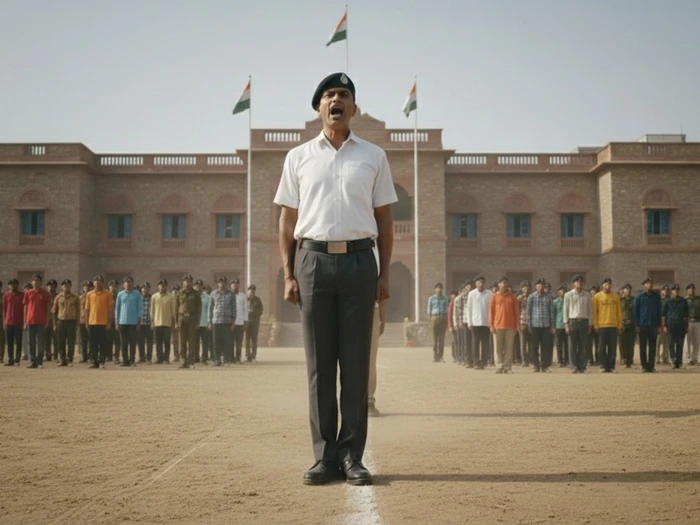

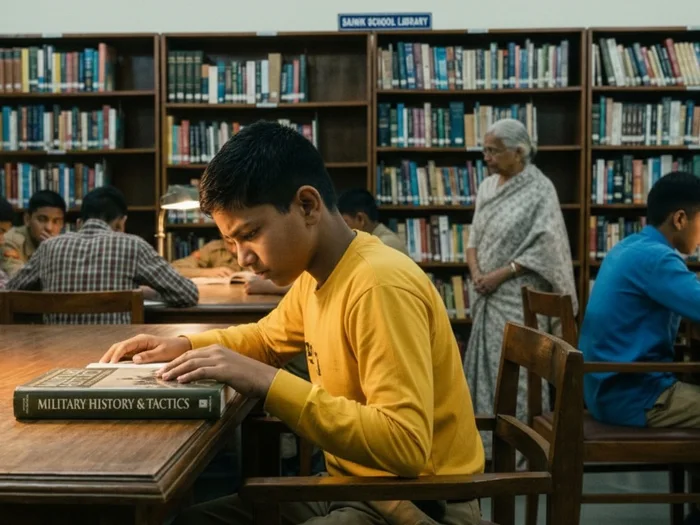
We don't just teach - we build students who are ready for Sainik School in every way. From written exams to physical tests and interviews, we cover it all under one roof.
Our teachers have actually served in the armed forces or passed out from Sainik Schools themselves
Updated study materials and practice papers for all subjects
Regular mock tests and detailed performance analysis
Take free mock tests and get detailed solutions with step-by-step explanations. Know exactly where you stand before the actual exam!
Complete practice tests simulating real Sainik School entrance exams with timer and all subjects covered.
Original question papers from past years with detailed solutions and analysis to understand exam trends.
Step-by-step explanations for every question with common mistakes, hints, and related topics.
Start with a free mock test and see how well you're prepared for the Sainik School entrance exam.
✓ No registration required • ✓ Instant results • ✓ Detailed solutions emailed
"You can teach a student a lesson for a day; but if you can teach him to learn by creating curiosity, he will continue the learning process as long as he lives."
Sainik Coaching has been preparing children for defence school admissions for over a decade. We focus on building concepts from scratch so that students can handle any question pattern in the actual exam.
We conduct tests every single day based on what was taught in class. This helps students remember things better and also reduces exam fear when they finally sit for AISSEE or other entrance tests.
At Sainik Coaching, we give students fully solved previous year papers along with shortcut methods. These tricks help them solve questions faster during the actual exam where time management is crucial.
Experience world-class online education with cutting-edge technology and expert faculty
Daily interactive live sessions
Direct doubt clearance access
Comprehensive digital resources
Regular practice tests
State-of-the-art facilities and comprehensive support for residential students
Dedicated quiet learning spaces
Nutritious hygienic meals
24/7 security & CCTV
Round-the-clock support
Comprehensive coaching programs designed to help students excel in Sainik School entrance examinations.
Comprehensive preparation for Sainik School Class 6 entrance exam covering all subjects and topics.
Advanced preparation for Sainik School Class 9 entrance exam with specialized focus on higher-level subjects.
Flexible online coaching programs with live classes, recorded sessions, and interactive learning platforms.
"Mock tests helped me track my progress and improve weak areas step by step. "
"Study material was clear and helped me complete topics without confusion. "
"Regular practice improved my reasoning ability and helped me solve questions faster. "
"Revision techniques helped me remember concepts clearly and perform better in exams. "
Sainik School, RMS & RIMC Coaching in Surendranagar

Here is something about Surendranagar that most people outside Gujarat do not know.
This city sits at the edge of the Little Rann of Kutch - and India's most extraordinary salt desert begins where Surendranagar district ends.
Gujarat produces 76 percent of India's salt. Not 30 percent. Not 50 percent. 76 percent. Three-quarters of every pinch of salt used in every Indian kitchen, every Indian factory, every Indian chemical plant - comes from Gujarat.
And the Little Rann of Kutch - which falls partly in Surendranagar district - produces a significant portion of that Gujarat salt.
The Agariya community. Salt farmers who have been extracting salt from underground brine in the Rann since the Mughal period. They set up temporary huts in the desert from October. They dig wells. They build salt pans. They work until March - when the heat becomes unbearable and the salt season ends. Then they pack up and leave. Then October comes and they return. This cycle has been running for over 400 years.
The British recognized the strategic importance of Rann salt. They built a railway line from Kharaghoda station directly into the Rann to transport salt. That was 130 years ago.
And the Little Rann of Kutch is also home to the Indian Wild Ass. The last remaining population of this species in the world. Nowhere else on earth. Only here. The Wild Ass Sanctuary, established in 1973, covers 4,953 square kilometers of the Little Rann.
So Surendranagar district sits adjacent to a salt desert that produces a quarter of India's salt and shelters the last wild ass population on earth.
That combination of extreme salt production and extreme biodiversity in the same ecosystem is something no other district in India can claim.
And Surendranagar city itself. Jhalawad as it was once called. Named Surendranagar after King Surendrasinhji of Wadhwan state. A district headquarters. Cotton trade. Groundnut cultivation. Government services. The Machchhu river system runs through the region.
It is not a glamorous city. Not a famous city. It does not have BITS or IIT or famous temples or earthquake stories.
What it has is salt, wild asses, and cotton farmers.
And children who deserve officer careers.
Sainik School Coaching in Surendranagar exists for those children. Also RMS Coaching in Surendranagar and RIMC Coaching in Surendranagar.
Let me say something specific about what salt production means for Surendranagar families.
Agariya salt workers work in one of India's most difficult environments. Extreme heat in summer. Salt that damages hands, feet, skin over years. Back-breaking manual labor. Income that depends on salt prices and government procurement rates.
The Agariya community is among the poorest in Gujarat despite producing wealth for the entire country. Their work is essential. Their income is not commensurate.
Not all of Surendranagar is Agariya. The district has farmers, traders, government employees, teachers. But the Agariya story runs through the district's identity.
For all these families - the question of stable income is not abstract. It is lived.
Army officer salary is the most stable salary in India. Every month. Same amount. Whether salt prices are up or down. Whether the cotton harvest was good or bad. Whether the government revised Agariya procurement rates or not.
That stability - experienced as a contrast to family income uncertainty - is what makes the army career path resonant in Surendranagar in a way it is not in comfortable cities.
Military School Entrance Coaching in Surendranagar is for families who understand this contrast.
Sainik Schools
33 across India. Defence Ministry. CBSE. Residential. Subsidized fees. After Class 12, NDA. Officer career.
Gujarat has one.
Sainik School Balachadi - About 150 km from Surendranagar. Jamnagar coast. Gujarat domicile gets 67% seats. Same state. Primary target.
Entry at Class 6 or Class 9. Exam is AISSEE ↗. Every January.
RMS Schools
Only 5 in India. None in Gujarat.
RMS Ajmer - About 570 km from Surendranagar. Rajasthan. Since 1930.
RMS Dholpur - About 750 km. Also Rajasthan.
Entry at Class 6 or Class 9. Exam is CET. December. Written. Interview. Medical. 50% each paper.
RIMC Dehradun
250 seats. All India. Hardest.
About 1,300 km from Surendranagar. Entry at Class 8. Hard math. Essay writing. Deep GK. Interview.
RIMC Coaching in Surendranagar - a child from the Little Rann has extraordinary GK material. Wild Ass Sanctuary. Salt production history. Rann geography. Agariya community. Indus civilization connections. This material is rare. It makes interview answers memorable.
The Indian Wild Ass.
Extinct everywhere in the world except the Little Rann of Kutch.
Every wild ass alive today lives in Surendranagar district's neighbourhood. Not symbolic presence - the entire species depends on this specific ecosystem.
They have survived. When their kind disappeared from Central Asia, from Iran, from Pakistan - they survived in the Rann.
Not because someone protected them initially. Because the Rann itself is extreme enough that most threats do not survive there long. The same extreme environment that is so hard for the Agariya community is also the reason the Wild Ass has a habitat that disturbances cannot easily reach.
Extreme conditions preserved a species.
Your child preparing for Sainik School in an interior Gujarat district with limited coaching infrastructure - the same principle applies. The difficulty of preparation in a less-resourced environment builds something that easier preparation in a better-resourced city does not always build.
Resilience. Problem-solving in difficult conditions. Determination to find solutions when systems do not hand them to you.
The Wild Ass survived the Rann. Your child can survive the AISSEE preparation.
AISSEE.

Class 6:
|
SUBJECT |
QUESTIONS |
MARKS |
|
Math |
50 |
150 |
|
Intelligence |
25 |
75 |
|
Language |
25 |
75 |
|
Total |
100 |
300 |
3 hours. No break. Math is 50% of total. The highest-weighted section. Win Math - win Class 6 AISSEE.
Class 9:
|
SUBJECT |
QUESTIONS |
MARKS |
|
Math |
50 |
150 |
|
Intelligence |
25 |
75 |
|
English |
25 |
75 |
|
Science |
25 |
75 |
|
Social Studies |
25 |
75 |
|
Total |
150 |
450 |
Same 3 hours. 150 questions. Speed is the exam at this level.
Class 6:
|
SECTION |
MARKS |
|
Intelligence |
50 |
|
GK |
25 |
|
Math |
100 |
|
English |
75 |
|
Total |
250 |
Class 9:
|
PAPER |
SUBJECTS |
MARKS |
|
Paper 1 |
English, Hindi, Social Science |
200 |
|
Paper 2 |
Math, Science |
200 |
|
Total |
400 |
50% each paper. Both must cross 50%.
RIMC.
|
SUBJECT |
MARKS |
|
English |
125 |
|
Math |
200 |
|
GK |
75 |
|
Total |
400 |
Interview marks added. Essay quality matters.
Strict. No exceptions.
|
SCHOOL |
CLASS |
AGE |
|
Sainik |
6 |
10-12 years |
|
Sainik |
9 |
13-15 years |
|
RMS |
6 |
10-12 years |
|
RMS |
9 |
13-15 years |
|
RIMC |
8 |
11.5-13 years |
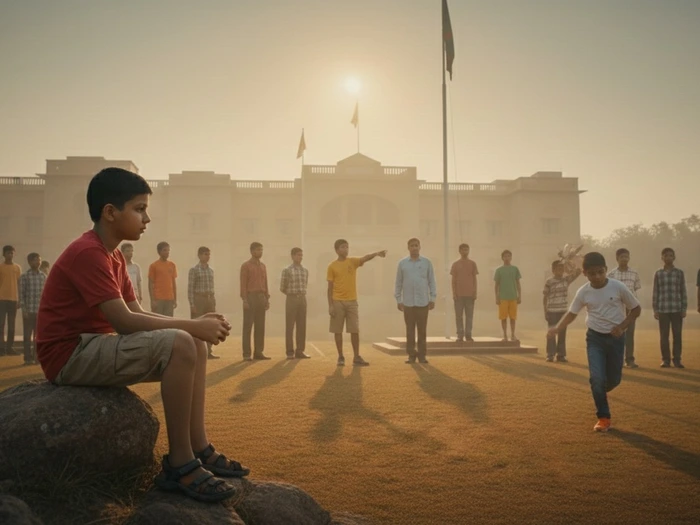
The Agariya salt season has exact dates. October to March. The Agariyas do not arrive in August and expect the brine to cooperate. They arrive in October when conditions are right. They leave in March before the heat makes work impossible. Exact windows. Work within them. The Sainik School Class 6 window is 10 to 12 years. Arrive prepared. Leave with selection.
Cotton farmer from Surendranagar district. 10 acres. Groundnut and cotton mixed farming. Standard Saurashtra agricultural family.
Son in Class 4. The boy helps on the farm sometimes during vacation. Understands agricultural seasons. Understands that some years are good and some are not.
The father said something that I found specific to this region.
He said - hamare yahan salt bhi hai, khet bhi hai, lekin dono mein uncertainty hai. Yahan the salt, here the fields, but both have uncertainty.
Salt worker income depends on government policy and market rates. Farm income depends on rainfall and market rates. Both uncertain. Both variable.
Army income depends on neither.
His son in Class 4 - two full years to Class 6 AISSEE. The timing is right.
We started. Math foundation. English daily habit. GK newspaper routine. Physical training.
Best Sainik Coaching in Surendranagar works for this farmer's family. Where the soil and the salt are both uncertain and the uniform represents certainty.
Honest assessment.
Genuine strengths.
Agricultural math - cotton and groundnut farming families. Acreage, yield per acre, price per quintal, loan interest. Practical calculation. This translates to AISSEE math advantage.
GK - Wild Ass Sanctuary. Little Rann salt geography. Agariya community history. Machchhu river. Surendranagar district history under Jhalawad state. This regional knowledge appears in GK sections.
Determination from agricultural background - Saurashtra farmers manage variable rains, variable prices, and sustained effort across seasons. This patience applies to two-year preparation cycles.
Physical fitness - outdoor agricultural life. Bodies built for sustained physical effort. Medical standards generally achievable.
What needs work.
English - this is the most significant gap. Surendranagar schools are Gujarati medium. English is secondary. AISSEE language section, RMS CET English, and especially RIMC English all require far more than school provides. 18 months of daily work minimum.
Hindi for language section - Gujarati-primary families need specific Hindi preparation.
Competitive math structure - practical farm arithmetic and exam algebra are different skills. Needs exam-format training.
Current affairs GK - strong in regional knowledge but national and international current affairs needs daily newspaper habit.
For Class 6 entry - start in Class 4. Full two years. English gap needs this time.
For Class 9 entry - start at the beginning of Class 7. One full year.
For RIMC - start in Class 6. Essay writing from week one. Two full years.
Ahmedabad is about 175 km from Surendranagar. For intensive coaching resources - Ahmedabad is the most accessible city. Weekend trips possible.
Surendranagar. At the edge of the Little Rann. 76 percent of India's salt from Gujarat. Wild Ass - last population on earth. Cotton and groundnut farming. Variable income and the quiet desire for certainty.
Sainik School Coaching in Surendranagar exists because Gujarat quota is 67%. Because Sainik School Balachadi is 150 km. Because Saurashtra farming children have the math foundation, the physical fitness, and the regional GK that these exams reward. Because the Wild Ass survived extreme conditions and your child can survive the AISSEE.
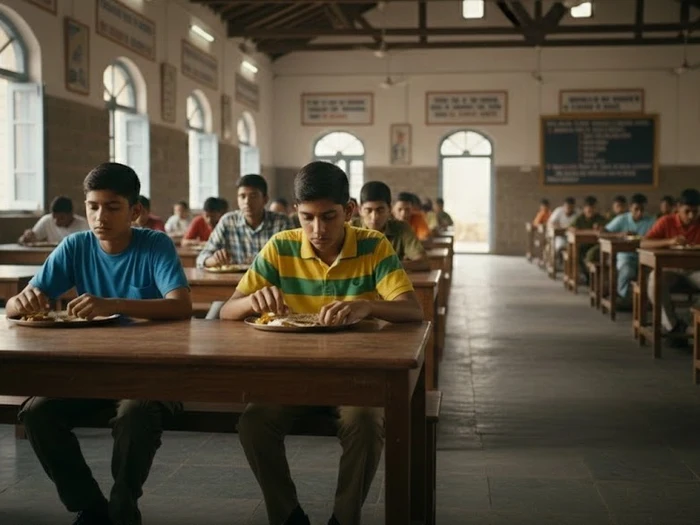
The exam does not ask about salt production percentages. Does not ask about wild ass population numbers. Does not ask about Agariya history or groundnut prices.
It asks math. English. Reasoning. GK.
Can your child answer correctly?
With the right preparation. Yes.
The Wild Ass is the only one left in the world. But it is still here.
Your child can be one of the few selected from Gujarat. But with preparation - still here. Still selected.
Start now.