

Should You Send Your Unruly Child to Sainik School? Honest Answer
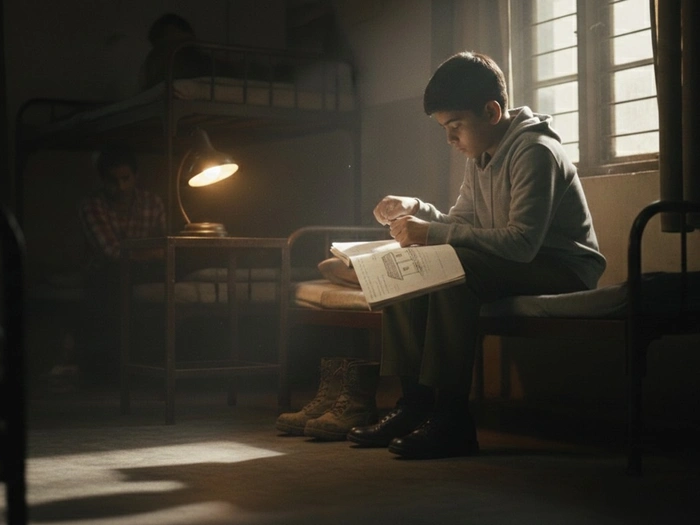
Pillai ji sat across from me in November. Direct person. He got to the point quickly.
"Sharma ji, I'm going to be honest. My son is difficult. Not bad — but difficult. He doesn't listen. He avoids studying unless forced. He's argumentative. Wastes time on phone. I've been reading about Sainik School's strict discipline and I'm thinking — maybe that's what he needs. Will Sainik School fix him?"
I gave him the honest answer. Not the marketing answer. The honest one.
The Question Behind the Question
When parents ask "will Sainik School fix my unruly child?" they're usually asking one of two different things:
"Will the strict residential environment provide the structure my child resists at home but might actually respond to?"
Or: "Is sending my child to Sainik School a way to outsource the discipline problem I haven't been able to solve?"
These are very different questions with very different answers. The first has a meaningful chance of being true. The second is a hope that doesn't usually pan out the way parents imagine.
Understanding which question you're actually asking is the starting point.
What Sainik School Discipline Actually Is
First, a specific clarification about what Sainik School's "strict discipline" actually looks like — because parents imagining military punishment often have the wrong picture.
Sainik School discipline is:
Structured daily routine: Fixed wake time (5:30 AM), mandatory PT, timed meals, study hours, lights out. Structure is non-negotiable. But it's a schedule, not punitive in design.
Consequence systems: Missing PT, breaking school rules, failing to maintain uniform or room standards — there are consequences. Extra duties, loss of privileges, formal disciplinary process for repeated violations.
Peer pressure and belonging: House system means children identify strongly with their house. Letting down your house in PT competitions, academics, or other activities has social consequences that children respond to very naturally.
Authority respect: Teachers, housemasters, seniors in the cadet hierarchy — there's a formal authority structure that children are expected to operate within.
No parent fallback: This is perhaps the most significant element. At home, a child who doesn't want to do something can delay, negotiate, or wait for a parent to eventually give in. At Sainik School, the routine runs regardless. There's no parent to negotiate with.
This structure is genuinely transformative for many children. But it works through a specific mechanism — not through punishment or fear, but through consistency and inevitability. The routine simply happens. The child's option is to resist it or adapt to it.
Who Actually Transforms in This Environment
Research on residential school environments and direct observation of Sainik School trajectories both suggest the same pattern: the children who respond most positively to structured residential environments share some specific characteristics.
They have a genuine underlying willingness, buried under surface resistance:
Many "unruly" children at home are resisting not structure itself, but specific dynamics in the home environment — parental authority patterns, sibling dynamics, a sense of being misunderstood, lack of genuine challenge. These children often surprise their parents by adapting remarkably well to residential school once the home-specific dynamics are removed.
This is Pillai ji's son's most likely profile. Argumentative at home, resistant to parental instruction — but potentially someone who would respond very differently to institutional authority, peer environment, and genuine physical and academic challenge.
They have physical energy that home/regular school can't adequately channel:
A child with high physical energy who resists sedentary study, but thrives when given genuine physical challenge, genuine sports competition, genuine PT demands — Sainik School's physical culture can be genuinely channelling. The "unruliness" was partly unmet physical energy.
They want to be respected and challenged, not managed and indulged:
Some children who perform frustratingly below expectations in a managing environment respond dramatically when given genuine challenge and genuine respect for capability. Sainik School's expectation culture — "you're here because you're capable, now show it" — can unlock children who've been coasting.
Who Does Not Transform (And May Struggle More)
The children for whom residential military school typically doesn't resolve the underlying issue, or may make it worse:
Children with genuine psychological or mental health issues that manifest as behavioural problems:
If the "unruliness" is a symptom of anxiety, depression, ADHD, learning differences, or another underlying issue — residential school doesn't treat the underlying cause. The structured environment may actually increase stress on a child whose behaviour is driven by an unaddressed condition.
If a child has any diagnosed or suspected psychological or mental health condition — get proper professional assessment before considering Sainik School as a behavioural intervention.
Children who are genuinely opposed to any authority, not just home-specific authority:
There's a difference between a child who resists parental authority specifically (home-environment resistance) and a child who genuinely cannot function within any institutional authority structure. The former often adapts well to Sainik School's different authority context. The latter struggles in any structured institutional setting.
Ask honestly: does your child resist authority in school too, not just at home? Teacher directions, school rules, coaches — or just parental direction specifically? The answer tells you which category they're likely in.
Children who haven't genuinely consented to the path:
This is perhaps the most important factor. A child who is sent to Sainik School against their explicit stated wish — who experiences this as punishment or exile rather than opportunity — often resists the environment rather than adapting to it. The institutional transformation that happens for willing or neutral children doesn't happen as readily for actively unwilling ones.
Compliance under duress is not the same as genuine engagement. And 7 years is a long time for a child who feels fundamentally opposed to being there.
The Conversation Pillai Ji Needed to Have
I suggested he sit with his son and have a specific conversation — not about Sainik School as a parental decision, but as an honest question.
"I've been reading about Sainik School. Do you know what it is? Let me tell you. What do you think about the idea? Would you want to try for it?"
Pillai ji called me back a week later.
"He was interested. He'd heard about it from a friend's older brother. He asked me if the PT was as hard as NDA PT. He wanted to look up the school. He asked if he could 'try it.'"
This response told him something important. His son's surface resistance to home-based authority was not a generalised opposition to challenge or structure — he was genuinely interested in something demanding when it was presented as opportunity rather than imposed as punishment.
That specific response made Sainik School a reasonable choice worth exploring seriously. A very different response — "I don't want to go anywhere, I'm fine here" — would have required a different approach.
The Honest Direct Answer to Pillai Ji's Question
"Will Sainik School fix my unruly child?"
If "unruly" means resisting parental authority at home while having the underlying capability and a spark of genuine interest in challenge — then yes, the Sainik School environment can be genuinely transformative. Many children who were described almost exactly as Pillai ji described his son have gone on to thrive there.
If "unruly" means genuinely opposed to any authority, showing the behaviour in school and all institutional settings too, and deeply unwilling to participate in this path — then no, sending them won't fix the behaviour. It may increase it under greater institutional pressure without the safety valve of parental understanding.
If "unruly" means a symptom of an underlying unaddressed condition — get the condition assessed and addressed first. Then reassess.
The honest variable is not the school. It's the child's underlying nature and genuine disposition toward this specific kind of challenge.
Why some children thrive in Sainik School environment while others struggle — the specific characteristics that predict which category a child falls into — is essential reading for any parent in Pillai ji's situation.
What Happened With Pillai Ji's Son
He appeared for AISSEE. Cleared it. Got allotted to Sainik School Bijapur.
Six months in — Pillai ji called me.
"Sharma ji, his housemaster called me last month. Said my son has been elected as the house PT representative. He's been the most consistent in morning drills. Academically still average but improving. And the housemaster said — and this surprised me — he's well-liked in the house because he pushes others to keep up when they're slacking."
The "argumentative" energy that drove Pillai ji to distraction at home had found a completely different expression in the structured environment. The peer challenge, the physical outlet, the authority context — it channelled something that was always there but had no productive direction at home.
Not every story ends this way. But Pillai ji's son's specific characteristics — surface resistance with underlying capability, physical energy, responsiveness to peer competition — are exactly the profile most likely to transform positively.
For Sainik School coaching in Jaipur and preparation guidance including an honest pre-admission assessment of whether the school is a genuine fit for your specific child — we help families make this decision with clear eyes, not just hope.
Bottom Line
"Sending an unruly child to Sainik School to fix them" works for some children and doesn't for others. The outcome depends almost entirely on the child's underlying nature — not the school's strictness.
Children who tend to transform: those with home-specific authority resistance (but not generalised institutional resistance), high physical energy without productive outlet, genuine interest in challenge when framed as opportunity.
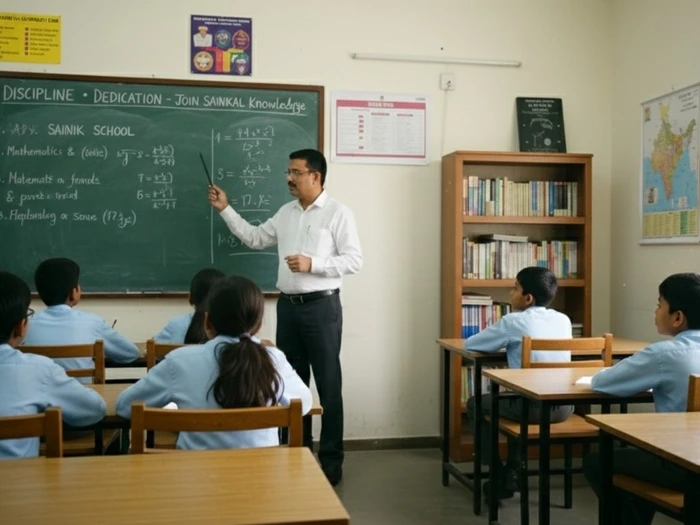
Children who may struggle more: those with generalised authority resistance across all contexts, possible underlying psychological/mental health conditions driving behaviour, genuinely unwilling participation.
The most important step: have an honest conversation with your child about what Sainik School is and what they think about it. Their genuine response — interest, curiosity, neutral, strongly opposed — tells you more than any external assessment.
If the child shows genuine interest — pursue it seriously.
If the child is strongly opposed — explore the reasons honestly before overriding them.
Sainik School is an extraordinary opportunity for the right child. And it is not the right environment for every child, including some "unruly" ones.
Need an honest assessment of whether Sainik School suits your specific child — beyond the generic "strict discipline is good for difficult children" advice? Contact us for a real conversation.
Want more honest guides on fit, adjustment, and what Sainik School life actually involves? Read our blog for complete parent guidance on every aspect of the decision.