

Complete Guide to Class 9 Sainik School Entrance Exam Preparation 2026
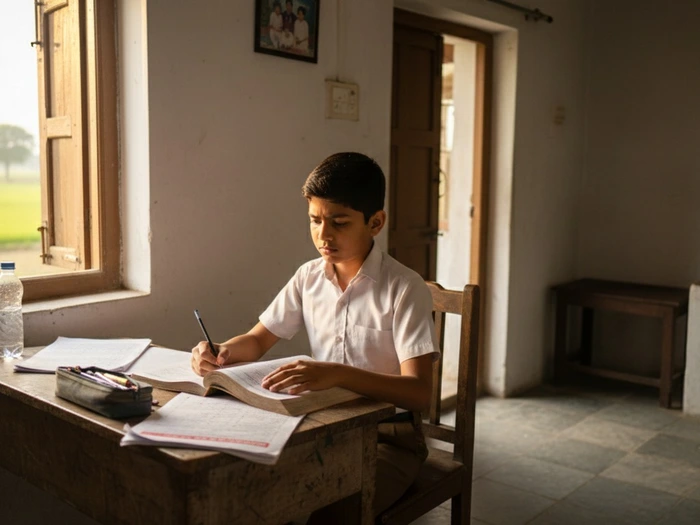
Tiwari ji called me in July. His son was in Class 8. They'd decided to target Sainik School Class 9 entry.
"Sharma ji, I've been reading about AISSEE for Class 6 all this while. Now I realise Class 9 preparation is different. More subjects. Different syllabus. Harder paper. Can you give me the complete picture — what's different, what to study, and how to prepare?"
Class 9 entry is genuinely different from Class 6. Families who prepare for Class 9 using Class 6 strategies underperform. The paper is harder, the subject scope is wider, and the competition is tougher.
Here's the complete guide specifically for Class 9 AISSEE preparation 2026.
How Class 9 Differs From Class 6
Understanding the differences first helps you calibrate preparation correctly.
More subjects: Class 6 paper covers Maths, English, GK, and Intelligence — 4 sections. Class 9 adds Science and Social Studies — 6 sections total.
Harder level: Class 9 paper is set at Class 8-9 difficulty level. More conceptual. More application-based questions. Less straightforward recall.
Longer paper: Class 6 paper is 125 questions in 150 minutes. Class 9 paper is approximately 150 questions in 180 minutes. Same time per question roughly — but sustained concentration required longer.
Fewer seats: Class 9 entry has significantly fewer seats than Class 6 at most schools. Many new Sainik Schools don't offer Class 9 entry at all. The available seat pool is smaller.
More serious competition: Class 9 applicants are typically more mature and deliberate. Many are second-attempt candidates or students who specifically planned for Class 9 entry. The casual first-timer pool is smaller.
These factors combine to make Class 9 harder to crack — but not impossible for a prepared student.
Class 9 AISSEE 2026 Paper Structure
Mathematics: 50 marks
Class 8-9 level. Number system, algebra (linear equations, polynomials basics), geometry (triangles, quadrilaterals, circles), mensuration (area, volume, surface area), statistics (mean, median, mode), profit-loss, time-distance, time-work, percentage, ratio, interest.
Difficulty is noticeably higher than Class 6 Maths. Multi-step problems. Application-based word problems.
General Knowledge: 25 marks
Same structure as Class 6 GK but slightly higher expectations. National symbols, India geography, history (ancient to modern), polity, science facts, current affairs, sports, awards, defence GK.
Current affairs component continues to be 4-6 marks.
English: 25 marks
Comprehension passages (longer and more complex than Class 6). Grammar (full range — tenses, voice, speech, error correction). Vocabulary (higher level). Writing component possible in some years.
Science: 25 marks
Physics, Chemistry, Biology — Class 8 level primarily. Motion and force (basic). Matter (states, properties). Atoms and molecules basics. Cell structure. Plant and animal systems. Basic chemical reactions. Light and sound basics.
NCERT Class 6, 7, and 8 Science chapters are the correct scope.
Social Studies: 25 marks
History (ancient India, medieval India, modern India — freedom movement heavily). Geography (India physical and political, world basics, climate, resources, agriculture). Civics/Polity (Constitution, Fundamental Rights, Parliament, local government). Economics basics (poverty, development, markets).
NCERT History, Geography, Civics, Economics Class 6, 7, and 8.
Intelligence and Reasoning: 25 marks
Same types as Class 6 — number series, letter series, analogy, odd one out, coding-decoding, blood relations, direction sense, mirror/water image. Slightly higher complexity in some question types.
The Preparation Timeline — 9 Months
If starting in April for January exam — 9 months of preparation. This is the ideal window for Class 9 entry.
Months 1-3: Foundation
Cover every chapter in every subject once. Not deep mastery — first pass through all content.
Maths: Algebra and geometry chapters are new territory for many Class 8 students. Spend more time here. NCERT Class 8 Maths as primary text. RD Sharma Class 8 for practice depth.
Science: NCERT Class 6, 7, 8 chapters systematically. One chapter per day. Read, understand concepts, answer NCERT questions.
Social Studies: NCERT History, Geography, Civics Class 6, 7, 8. One book at a time. History first — it has the most content.
English: Grammar rules (Wren and Martin key chapters). Daily reading — 15 minutes English text.
GK: National symbols, India geography, state capitals — fixed knowledge items covered in Month 1.
Intelligence: Introduction to all question types. One type per week.
Months 4-6: Depth and Practice
Go deeper in each subject. Targeted practice on weak areas identified in Month 3 assessment.
Give first full mock test at end of Month 3. Analyse section-wise performance. Identify top 3 weak areas. These get extra daily time in Months 4-6.
Maths: Timed practice sets begin. 10 questions, 12 minutes. Speed building phase starts.
Science: MCQ practice alongside concept study. Any good Class 8 Science guide with objective questions.
Current affairs: Begin daily newspaper reading (15 minutes). Track: awards, appointments, defence news, government schemes.
Intelligence: All question types covered. Speed practice begins.
Months 7-9: Mock Tests and Exam Simulation
Full mock tests every week from Month 7.
Daily schedule:
Morning: 20 minutes. Mental maths. GK flashcard review. 3 Intelligence problems.
Evening: 2 hours. Rotating subject focus. Timed practice sets. Science and Social Studies revision cycles.
Weekly: Full length mock test under exam conditions. 180 minutes. All 6 sections. OMR practice. Score analysis by section.
Month 9 focus: Current affairs revision. Weak area last push. No new topics. Consolidation only.
Subject-Specific Strategy
Maths — the differentiator
Class 9 Maths has the widest mark range — from 28 to 50 among students who pass. Maths is where most marks are gained or lost.
Algebra: Linear equations in one and two variables. Polynomials — degree, types, factor theorem basics. These are Class 8 topics but many students are weak here.
Geometry: Properties of triangles (congruence, similarity basics). Quadrilateral properties. Circle basics.
Speed is critical: 50 marks, approximately 60 minutes allocated. That's 72 seconds per question. Build this speed through timed sets from Month 4 onwards.
Science — the equaliser
Most students underestimate Science and underprepare. It's 25 marks — equal to English or GK. Students who prepare Science well gain an edge over those who treat it as secondary.
NCERT is the entire scope. Nothing beyond NCERT is tested. Read every chapter carefully. Understand the concept — don't memorise. Questions test understanding, not recall.
Social Studies — GK's bigger sibling
SS is 25 marks of organised knowledge. Unlike current affairs GK which requires constant updating, Social Studies is more stable content.
History is the heaviest section — modern India and freedom movement are particularly important. Know the major movements, their leaders, their years, their outcomes.
Geography: India's physical geography — Himalayas, Northern Plains, Deccan Plateau, rivers, climate zones, soil types, resources. This is more factual and more memorisable than History.
Civics: Preamble keywords, Fundamental Rights (6 types), Parliament structure, President vs PM roles. These repeat frequently.
English — the surprise section
Many Class 8 students underestimate how demanding Class 9 AISSEE English is. Comprehension passages are longer. Grammar questions are more nuanced.
Daily reading throughout preparation is the single most effective English preparation. 15 minutes of actual English reading — books, quality articles — builds comprehension stamina that no workbook can replicate.
Grammar: Wren and Martin target chapters — voice (active/passive), narration (direct/indirect), tenses, common errors. These are the high-frequency grammar types.
GK — consistent daily investment
GK preparation for Class 9 is the same as Class 6 — systematic static GK plus consistent current affairs from July to December.
Defence GK matters slightly more at Class 9 level. Army, Navy, Air Force structure. Recent major military exercises. Defence acquisitions. Current service chiefs.
Intelligence — fastest improvement section
Same approach as Class 6. Learn each type's rules. Practice 20-30 questions per type. Speed through volume.
Students who start Intelligence late lose easy marks. Start Month 1 and maintain throughout.
Competition Reality for Class 9
Class 9 entry is harder than Class 6 for three structural reasons:
Fewer seats. Many schools offer 20-30 Class 9 seats vs 70-100 Class 6 seats.
Tougher applicant pool. Students who specifically planned for Class 9 entry have prepared deliberately. There are fewer "accidental" or underprepared applicants at this level.
Higher cutoffs relative to paper difficulty. Even though the paper is harder, the competitive cutoff for popular schools is still demanding.
What this means: A student targeting Class 9 entry needs to be genuinely well-prepared across all 6 sections. Compensating for weakness in one section by strength in another is limited — the paper is 6 sections and all contribute.
For Class 9 Sainik School coaching specifically — structured batch preparation, Science and Social Studies specific material, Class 9 pattern mock tests — Sainik Study provides targeted Class 9 preparation that covers what Class 6 coaching misses.
Common Mistakes in Class 9 Preparation
Ignoring Science and Social Studies:
Families familiar with Class 6 preparation sometimes focus only on Maths, English, GK and ignore the two additional subjects. These are 50 marks combined — equal to Maths. Ignoring them is ignoring 29% of the paper.
Using Class 6 mock tests:
Class 6 mock tests don't include Science and Social Studies. They give false confidence. Always use Class 9 specific mock tests with all 6 sections.
Underestimating English:
Class 9 English is harder than most students expect based on their regular school English. The comprehension passages and grammar demands are higher. Daily reading is not optional — it's essential.
Starting too late:
9 months is the right window. 4-5 months is a rush. Class 9 has 50% more content than Class 6. The same preparation time produces meaningfully less coverage.
The Medical Examination Factor
Class 9 entry students are 13-15 years old. Medical standards apply at the same parameters as Class 6 — eyesight limit -2.50, height-weight proportionality, flat feet, dental, hearing.
For Class 9 students specifically: teenagers who've spent significant screen time during Class 6-8 schooling often have higher myopia progression than Class 6 entry students. Check eye power early in preparation. Don't assume it's fine because it was fine two years ago.
Bottom Line
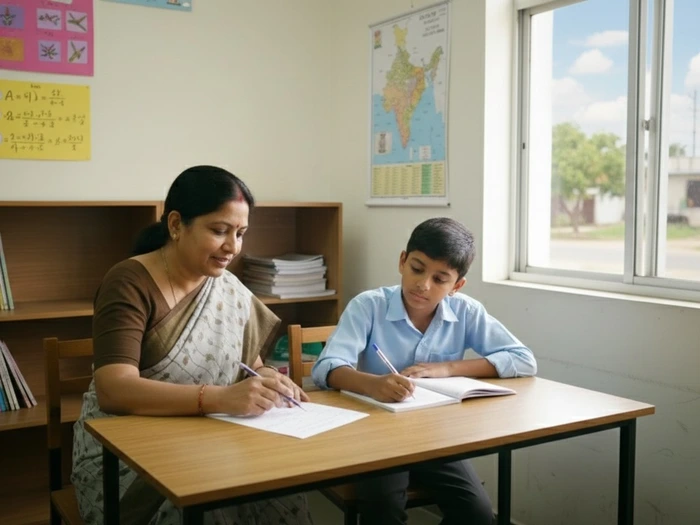
Class 9 AISSEE is harder, wider, and more competitive than Class 6. Preparation must reflect this.
6 sections instead of 4. Science and Social Studies are 50 additional marks that must be taken seriously.
9-month preparation window is ideal. Start in April for January exam.
Three-phase plan: Foundation (Months 1-3), Depth and Practice (Months 4-6), Mock Tests and Refinement (Months 7-9).
Section priorities: Maths is the differentiator. Science and Social Studies are the equaliser if prepared. English is harder than expected — daily reading is essential.
Previous year Class 9 AISSEE papers are the most important single resource.
Class 9 specific mock tests — not Class 6 tests — throughout the preparation.
Need structured Class 9 specific AISSEE preparation with subject-wise guidance and Class 9 format mock tests? Contact us for a complete programme built specifically for Class 9 entry.
Want more detailed AISSEE preparation guides for Class 6 and Class 9? Read our blog for complete strategy guides on every section and every stage.