

Category-wise Admission Cut Off: SC, ST, OBC, Defence & General 2026
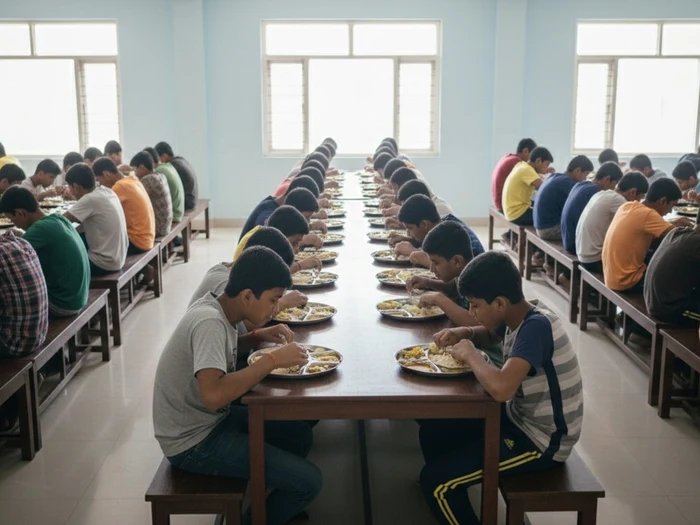
Yadav ji called me the evening results came out.
"Sharma ji, my son scored 219. OBC category. From Madhya Pradesh. Someone in our parent group said 219 OBC can get a school. Someone else said minimum 240 is needed. Who is right?"
Both people were guessing. Neither had category-specific data for MP OBC.
219 OBC from MP is a completely different competitive situation from 219 General from MP. Different seats. Different competition pool. Different historical cutoffs. Same marks — entirely different story.
Here's the complete category-wise cutoff guide for Sainik School 2026 — what each category's cutoffs look like, why they differ, and how to use this information to build a realistic picture of your child's chances.
Why Category Cutoffs Are So Different
Every Sainik School reserves seats according to central government reservation policy:
- UR/General: approximately 40.5% of seats
- OBC: approximately 27% of seats
- SC: approximately 15% of seats
- ST: approximately 7.5% of seats
- Defence: approximately 25% of seats (cross-cutting across categories)
Each category has its own competition pool. The cutoff is determined by the last student admitted in that category — not compared across categories.
Result: lower number of seats in a reserved category + smaller applicant pool = lower cutoff than UR category.
A school's UR cutoff might be 248. Its SC cutoff might be 202. The same school. 46 marks difference. Both are valid admissions to the same school.
General / UR Category Cutoff Range
Class 6 — Old Schools, Home State Quota:
High competition states (UP, Rajasthan, Bihar, Haryana, Maharashtra): 235-265 marks expected range.
Moderate competition states (MP, Gujarat, Karnataka, Tamil Nadu, Andhra Pradesh): 220-250 marks expected range.
Lower competition states (Northeast states, Himachal Pradesh, Uttarakhand, J&K, Goa): 200-235 marks expected range.
Class 6 — Old Schools, All-India Quota:
Typically 15-30 marks higher than the same school's home state General cutoff. Nation-wide competition for fewer seats.
Class 9 — Old Schools:
Generally 15-25 marks higher than Class 6 at the same school. Harder paper, fewer seats, more experienced candidates.
New Sainik Schools:
Typically 15-30 marks lower than comparable old school General cutoffs. Less competition.
UR/General is the most competitive category. Highest cutoff. No reserved seats from other categories to fall back on. Only UR seats are accessible.
OBC Category Cutoff Range
OBC (Other Backward Classes) with valid OBC-NCL (Non-Creamy Layer) certificate.
Class 6 — Old Schools, Home State Quota OBC:
High competition states: 215-245 marks expected range (approximately 20-25 marks below General cutoff for same school/state).
Moderate competition states: 200-230 marks expected range.
Lower competition states: 185-215 marks expected range.
Why OBC cutoff is lower than General:
OBC has its own reserved seat pool. Competition within OBC is smaller than competition within General — because only OBC students compete for OBC seats. Fewer competitors per seat = lower effective cutoff.
Additionally, OBC students can also qualify for UR seats if they score above UR cutoff. So a high-scoring OBC student gets a UR seat; the OBC reserved seats fill from the lower-scoring OBC pool.
Key requirement: OBC certificate must say "Other Backward Class — Non Creamy Layer" specifically. Must be from Central OBC list (not just state OBC list). Must not be expired. Without a valid OBC-NCL certificate, student competes as UR regardless of community background.
For Yadav ji's son — 219 OBC, MP:
MP OBC home state cutoff at MP schools (Sainik School Rewa for example) has historically been around 205-220 range. His 219 is right at the top of this range. Competitive, possibly sufficient for Rewa in a typical year.
SC Category Cutoff Range
SC (Scheduled Caste) with valid SC certificate.
Class 6 — Old Schools, Home State Quota SC:
High competition states: 195-225 marks expected range (approximately 35-45 marks below General cutoff).
Moderate competition states: 185-215 marks expected range.
Lower competition states: 170-205 marks expected range.
Class 6 — All-India Quota SC:
Slightly higher than home state SC — but still significantly lower than UR all-India cutoff.
Why SC cutoff is significantly lower:
SC has reserved seats across all categories. SC student pool is smaller. Per-seat competition is lower.
Additionally, SC students get separate sub-allocation — SC seats within home state quota and SC seats within all-India quota. This further reduces competition per seat.
Key requirement: SC certificate must be from competent authority. Must be for Central Government purposes. Must mention "Scheduled Caste." Must not have any validity issues.
Practical implication: A student scoring 195-210 SC from a moderate competition state has realistic chances at multiple schools. This is genuinely competitive territory for SC category.
ST Category Cutoff Range
ST (Scheduled Tribe) with valid ST certificate.
Class 6 — Old Schools, Home State Quota ST:
High competition states: 180-210 marks expected range (approximately 50-60 marks below General).
Moderate competition states: 165-200 marks expected range.
Some schools and states: ST cutoffs can be as low as 150-170 marks because ST applicant pools are very small.
Why ST cutoff is lowest:
ST population proportion is smallest. ST applicant pool is smallest. Per-seat competition is lowest.
Many schools in non-tribal states have very few ST applicants — meaning even the reserved ST seats sometimes go unfilled or fill at very low cutoffs.
Practical implication: A student scoring 170-185 ST from most states has genuinely competitive chances at multiple schools. This is perhaps the most accessible category pathway into Sainik School.
Key requirement: ST certificate from competent authority for Central Government purposes. Valid and current.
Defence Category Cutoff Range
Children of serving or retired Indian Armed Forces personnel.
Defence is a cross-cutting category. It doesn't have its own separate school quota in the same way SC/ST do. Rather, approximately 25% of seats at each school are designated for defence children — distributed proportionally across UR, OBC, SC, ST sub-categories.
Effective cutoff for Defence UR (General + Defence):
Typically 15-25 marks lower than regular UR cutoff at the same school. Smaller applicant pool for defence seats specifically.
Effective cutoff for Defence OBC:
Further reduced from OBC cutoff — Defence OBC applicant pool is smaller still.
Why Defence cutoff is lower than civilian category equivalent:
The defence population from any given state is a subset of the total population. Fewer defence children applying = lower effective cutoff for the reserved defence seats.
Who qualifies:
Serving Army, Navy, Air Force personnel (current service). Ex-servicemen (retired). War widows and children of defence personnel killed in action (highest priority, lowest cutoff). Paramilitary forces (CRPF, BSF, CISF etc.) — check specific school's policy as some include paramilitary and some don't.
Documentation:
Service certificate from Commanding Officer (serving). Discharge book or pension documents (retired). Death certificate + service record for war widows.
Strategic value:
Defence category is one of the most underused advantages in AISSEE. Many eligible families don't claim Defence status, either because they don't know they qualify or because they assume it doesn't make a difference. It makes a significant difference — 15-25 marks effectively at most schools.
The Interaction Between Category and State Quota
Category cutoffs interact with state quota in a multiplicative way.
A student who is SC + Home State gets the SC cutoff advantage AND the home state quota advantage (smaller, state-specific competition). This is the most accessible entry point.
A student who is SC + All-India is still SC category with lower cutoff, but competing nationally within SC pool — slightly tougher than home state but far more accessible than UR all-India.
A student who is UR + All-India has neither advantage. This is the most competitive combination.
Building your preference list means stacking your advantages:
Home state schools at top (state quota advantage). Your category schools where cutoff historically matches your score (category advantage). New schools where all-India merit helps (AIR advantage if strong).
Understanding how state rank and category rank together determine actual admission shows exactly how to layer these advantages.
How to Check If Your Category Certificate is Valid
Before relying on category advantages in e-counselling — verify your certificate meets all requirements.
OBC-NCL certificate checklist:
- Mentions "Other Backward Class"
- Mentions "Non-Creamy Layer" specifically
- Community is in Central OBC list (not just state list — different)
- Issued by Tehsildar or SDM (not gram panchayat)
- Issued within validity period (typically 1 year — check date)
- In student's name or parent's name as required
SC/ST certificate checklist:
- Mentions correct category (SC or ST)
- Mentions "Central Government purposes" or equivalent
- Issued by competent authority
- No disputes about community in that state
Defence certificate checklist:
- Issued by Commanding Officer (serving) or discharge documents (retired)
- Mentions relationship (son/daughter of)
- Current and valid
Invalid certificate at document verification = seat cancelled. No exceptions. Verify before registration, not after allotment.
What Happened With Yadav Ji's Son
219 marks. OBC. Madhya Pradesh.
We worked through the analysis. Sainik School Rewa — MP OBC home state quota. Historical MP OBC cutoff around 205-220. His 219 was competitive.
We added: two new Sainik Schools in MP and neighbouring states where OBC all-India cutoffs were around 195-210. Several more as backups.
Preference list submitted. Round 1: He got Sainik School Rewa. MP OBC home state quota.
219 OBC worked. Because we understood what 219 OBC actually means in competitive terms — and targeted schools where it was genuinely sufficient.
For complete Sainik School preparation that includes not just exam coaching but strategic school selection guidance based on your category and state — we give families the full picture, not just exam preparation.
Quick Reference: Expected Cutoff Ranges by Category (Class 6, Moderate Competition State, Old School, Home State Quota)
| Category | Expected Range |
|---|---|
| UR / General | 220 — 250 |
| OBC-NCL | 200 — 230 |
| SC | 185 — 215 |
| ST | 165 — 200 |
| Defence UR | 205 — 235 |
| Defence OBC | 185 — 215 |
These are estimated ranges based on historical data. Actual cutoffs vary by specific school, state, year, and paper difficulty. Use as planning guide only.
Bottom Line
Category dramatically changes the competitive picture. Same marks = completely different situation in different categories.
UR/General: highest cutoff, largest competition pool, no reserved seat backup.
OBC-NCL: typically 20-25 marks below General. Own reserved seats. Valid certificate mandatory.
SC: typically 35-45 marks below General. Smaller competition pool. Significant advantage.
ST: typically 50-60 marks below General. Smallest competition pool. Most accessible category.
Defence: 15-25 marks below civilian equivalent. Cross-cutting advantage. Underused by many eligible families.
Always verify certificate validity before registration. Invalid certificate at verification = seat cancelled.
Layer your advantages: home state schools + your category + strategic new school choices = maximum probability of seat.
Need help understanding exactly what your child's marks and category mean for specific school selection? Contact us for honest, category-specific guidance.
Want more detailed information about AISSEE cutoffs and admission strategy by category? Read our blog for complete guides on every aspect of Sainik School admission.